 Fettle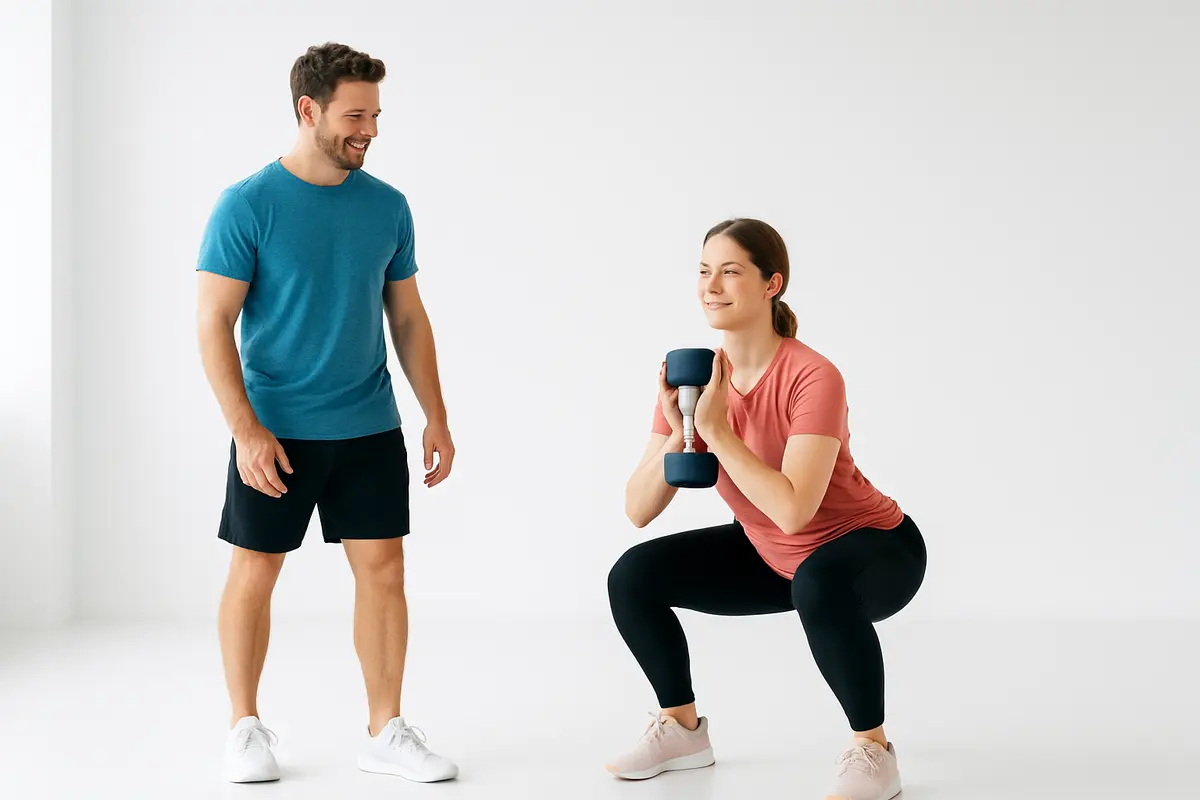
Taking on a brand new client who has never stepped foot in a gym is a massive responsibility. For a true beginner, the gym floor can be a highly intimidating environment filled with confusing machines and heavy weights. Your primary job during their first few weeks is to build their confidence and help them feel comfortable in this new setting.
Many coaches make the mistake of overcomplicating a beginner's routine. They try to impress the client with complex exercises or intense circuits that leave them excessively sore. If you want to know how to program for a beginner effectively, you must strip away the complexity. A successful beginner plan focuses on establishing basic movement patterns and building a foundation of consistency.
Assess their current movement capacity
Before you write a single workout, you need to understand how your client moves. A beginner will likely have mobility restrictions or postural habits developed from years of sitting at a desk. You do not need a complex physical therapy assessment, but you do need to observe their basic mechanics.
Start with simple bodyweight movements during their initial consultation. Ask them to perform a bodyweight squat, a hip hinge and a simple overhead reach. Watch how they control their body in space. Note any obvious limitations, like heels lifting off the floor during a squat or an inability to keep a neutral spine during a hinge.
Use these observations to guide your exercise selection. If a client struggles with ankle mobility, putting a barbell on their back for squats is a bad idea. You will need to select variations that accommodate their current mobility while working to improve it over time. The goal is to set them up for success from day one.
Pick simple compound variations
When building the routine, focus entirely on the fundamental movement patterns. Every beginner programme should include a squat, a hinge, a push, a pull and a loaded carry. These movements provide the biggest return on investment for strength and coordination.
Avoid highly technical barbell lifts in the first phase of training. Instead, use kettlebells, dumbbells and machines to teach the patterns safely. A goblet squat is much easier for a beginner to learn than a barbell back squat. A cable row provides more stability than a bent over barbell row. These simpler variations allow the client to feel the working muscles without worrying about complex technique.
Limit the number of exercises per session. Four to six movements are plenty for a novice. Overloading a session with 10 different exercises will only confuse the client and dilute their focus. Keep the exercise selection consistent from week to week so they have a chance to practice and master the movements.
Keep the training volume manageable
One of the biggest errors coaches make is applying too much volume too soon. A beginner will respond to a very small amount of stimulus. Their central nervous system is not adapted to lifting weights, and excessive volume will lead to severe delayed onset muscle soreness. Extreme soreness will discourage them from returning for their next session.
Start with just two or three sets per exercise. Keep the repetitions in the moderate range, typically between 8 and 12 reps. This rep range provides enough practice to groove the movement pattern without causing excessive fatigue. At this stage, form breakdown usually happens because of mental fatigue rather than muscular failure.
Limit the training frequency to two or three full body sessions a week. This allows for adequate recovery between workouts. A beginner does not need complex body part splits. Full body sessions ensure they practice the core movement patterns frequently, which accelerates their motor learning and builds confidence quickly.
Plan for steady progressive overload
Progressive overload is the driver of all physical adaptation. However, progression for a beginner looks different than progression for an advanced lifter. Adding weight to the bar is not the only way to progress a movement. In the first few weeks, improved technique is the most important form of progression.
Focus on execution before load. Celebrate when a client achieves a deeper range of motion on a split squat or maintains a better posture during a dumbbell row. Once their technique is solid and consistent, you can begin to increase the challenge.
When you do add load, make the jumps as small as possible. Moving from a 10 kilogram kettlebell to a 12 kilogram kettlebell on a goblet squat is a huge percentage increase for a beginner. Use fractional plates if you have them, or increase the repetitions slightly before jumping to the next dumbbell increment. Gradual progression keeps the joints safe and prevents sudden plateaus.
Educate them on effort and intensity
Beginners rarely know what true physical exertion feels like. They often stop a set because the muscle starts to burn or they feel slightly breathless, rather than because they are approaching muscular failure. Part of your role is to teach them how to rate their perceived exertion accurately.
During the first few weeks, keep the intensity relatively low. Ask them to leave three or four repetitions in reserve at the end of every set. As their technique solidifies, you can gradually teach them to push closer to failure on safe exercises like machine presses or leg curls.
Explain the difference between muscular fatigue and joint pain. They need to understand that a burning sensation in the quads is normal, but a sharp pain in the knee is a signal to stop. Communication is essential here. A good coaching setup relies on excellent tracking. Fettle handles client tracking, weekly check-ins, routine adjustments and training programmes, ensuring you always know how your beginner clients are adapting to their new lifestyle.
Frequently asked questions
Should beginners do cardiovascular training?
Yes, basic cardiovascular fitness is important for overall health and work capacity. Encourage beginners to increase their daily step count and include short bouts of moderate cardio, like brisk walking or cycling, on their non-lifting days.
How long should a beginner stay on their first programme?
A beginner can usually follow their initial programme for 6 to 8 weeks. As long as they are consistently improving their technique and gradually adding load or repetitions, there is no need to change the exercises frequently.
What if a beginner is too intimidated to use free weights?
If a client is highly anxious about free weights, start them entirely on resistance machines. Machines provide a safe, guided path of motion that builds basic strength and confidence. You can slowly introduce dumbbells as they become more comfortable in the gym environment.